Sewer backups can cause extensive property damage, create health hazards, and lead to costly remediation for homeowners. A backwater valve is one of the most effective defenses against unexpected sewer backups. This one-way valve is installed on a home’s main sewer line, allowing wastewater to flow out but preventing sewage from backing up into the house. A backwater valve uses mechanical flaps that automatically close to block the pipe opening in the event of sewer backups.
How do backwater valves work?
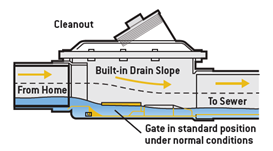
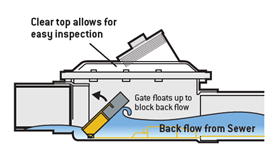
When everything is functioning properly, the backwater valve allows wastewater to flow out of the home. During a sewer backup, water and waste will begin flowing from the main sewer line back toward the house. When that happens, the flapper valve will float up to close the pipe opening and block the flow. As water begins to flow in the correct direction, the flap will fall back open.
Who needs a backwater valve?
Backwater valves are especially important in areas prone to sewer backups, such as regions affected by heavy rains or tidal flooding. Heavy rainfall can overwhelm municipal sewer systems, leading to backflow into homes. For this reason, some states and municipalities require backwater valves.
Homes with basements are also more at risk for sewer backup issues, and some building codes require backwater valves to be installed in homes with plumbing fixtures below a certain level.
Choose Backwater Valves Built for Pros
A backwater valve is a simple device that can save homeowners from costly repairs, property damage, and health risks. IPS Corporation manufactures a complete line of backwater valves engineered for durability, code compliance, and ease of installation. Our valves are trusted by contractors and inspectors across the industry to deliver reliable backflow protection on both residential and commercial projects.
Contact our team to learn more about our backwater valve options and find the right fit for your project.